Pearson Edexcel · GCSE · Business
Course version: 1BS0 · Version from Sept 2017
Calculation and interpretation of cash-flow forecasts: ● cash inflows ●…
Full specification wording
Cash and cash-flow: Calculation and interpretation of cash-flow forecasts: ● cash inflows ● cash outflows ● net cash flow ● opening and closing balances.
A cash-flow forecast predicts the money moving in and out of a business over a specific period.
Checked against the Pearson Edexcel 1BS0 specification (opens in a new tab) on .
- Point 2 of 2
- 3 key terms
Study notes
From the checked teaching notes for this specification point.
The idea
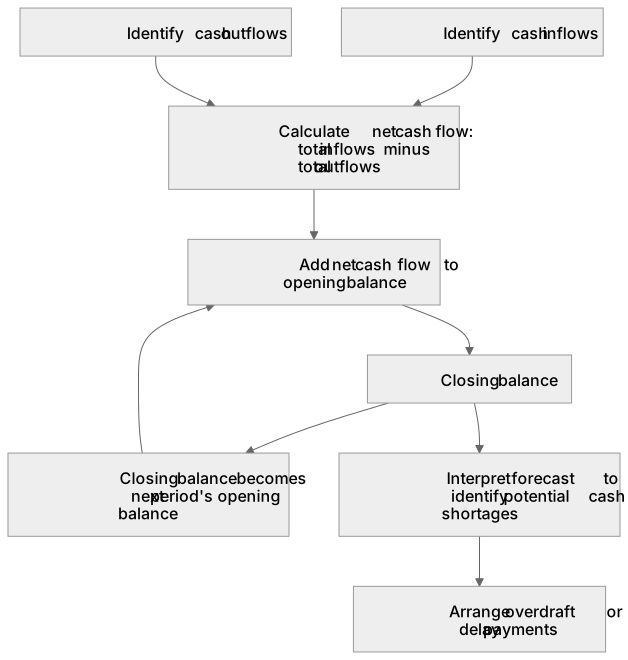
A cash-flow forecast predicts the money moving in and out of a business over a specific period. To calculate it, first identify all cash inflows (receipts like sales revenue or loans) and cash outflows (payments like rent, wages, or stock purchases). The net cash flow is calculated by subtracting total outflows from total inflows. The opening balance is the cash available at the start of the month. To find the closing balance, add the net cash flow to the opening balance. This closing balance then becomes the opening balance for the next month. Interpreting these forecasts allows a business to identify potential cash shortages in advance, enabling them to arrange an overdraft or delay payments, ensuring they remain solvent.
What earns the marks
- Net cash flow is calculated as total cash inflows minus total cash outflows.
- Closing balance is calculated by adding the net cash flow to the opening balance.
- The closing balance of one period always becomes the opening balance of the subsequent period.
- Interpretation involves identifying periods of negative cash flow to make informed decisions, such as arranging short-term finance.
Common mistakes and how to put them right
Confusing cash flow with profit.
Put it right: Profit includes non-cash items and credit sales not yet received, whereas cash flow only records actual money movements.
Adding outflows to inflows instead of subtracting them.
Put it right: Subtract total outflows from total inflows to find net cash flow.
Forgetting to transfer the closing balance to the next month's opening balance.
Put it right: Ensure the closing balance of January is written as the opening balance for February.
Exam tips
- When calculating missing figures in a table, work backwards if necessary by subtracting the opening balance from the closing balance to find the net cash flow.
- Always check if a negative figure is indicated by brackets, such as (500), and ensure you subtract this amount during calculations.
- Use the forecast to suggest a specific solution for a cash shortage, such as delaying a planned equipment purchase or negotiating longer payment terms with suppliers.
Try the lesson
The start of the Cash and cash-flow: Calculation and interpretation of cash-flow forecasts: ● cash inflows ● cash outflows ● net cash flow ● opening and closing balances. lesson, made from checked teaching notes for this specification point.
Have a go first
A business has total cash inflows of £5,000 and total cash outflows of £3,500 in a month. What is the net cash flow for the month?
Listen
A cash-flow forecast predicts the money moving in and out of a business over a specific period. To calculate it, first identify all cash inflows (receipts like sales revenue or loans) and cash outflows (payments like rent, wages, or stock purchases). The net cash flow is calculated by subtracting total outflows from total inflows. The opening balance is the cash available at the start of the month. To find the closing balance, add the net cash flow to the opening balance. This closing balance then becomes the opening balance for the next month. Interpreting these forecasts allows a business to identify potential cash shortages in advance, enabling them to arrange an overdraft or delay payments, ensuring they remain solvent. A strong answer earns marks for these points. Net cash flow is calculated as total cash inflows minus total cash outflows. Closing balance is calculated by adding the net cash flow to the opening balance. The closing balance of one period always becomes the opening balance of the subsequent period. Interpretation involves identifying periods of negative cash flow to make informed decisions, such as arranging short-term finance. Exam tip: When calculating missing figures in a table, work backwards if necessary by subtracting the opening balance from the closing balance to find the net cash flow.
See it
Key words
Say what each word means before you turn the card.
Net cash flow
Try answering aloud or in your head before turning the card.
Closing balance
Try answering aloud or in your head before turning the card.
Opening balance
Try answering aloud or in your head before turning the card.
See every definition
- Net cash flow
- Calculated by subtracting total cash outflows from total cash inflows.
- Closing balance
- Calculated by adding the net cash flow to the opening balance.
- Opening balance
- The cash available at the start of the month.
Label the diagram
Some boxes have lost their names. Pick the right name for each number.
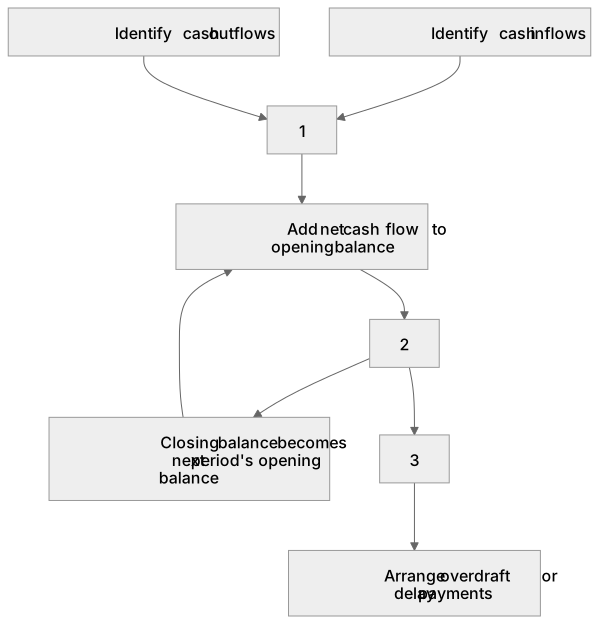
1Box 1
2Box 2
3Box 3
There is more to this lesson
The full lesson goes on to check your understanding and help you earn the marks. Create a free account to carry on, with your progress saved.
A week of Premium from your first lesson · Then the free plan continues · No card, no charge
Test your understanding of Cash and cash-flow: Calculation and interpretation of cash-flow forecasts: ● cash inflows ● cash outflows ● net cash flow ● opening and closing balances.
Active recall beats re-reading. Take an instant quiz now to test what you’ve learned and lock it into long-term memory.
A week of Premium from your first lesson · Then the free plan continues · No card, no charge